RFP to Client-Ready Deliverables with Turboconsultant
Proposal, contract, kick-off pack, deliverable, quality control — at roughly 25× the speed of a consultant working without AI. The two engagements from the episode, step by step, every page, unedited, with the clock on each step.
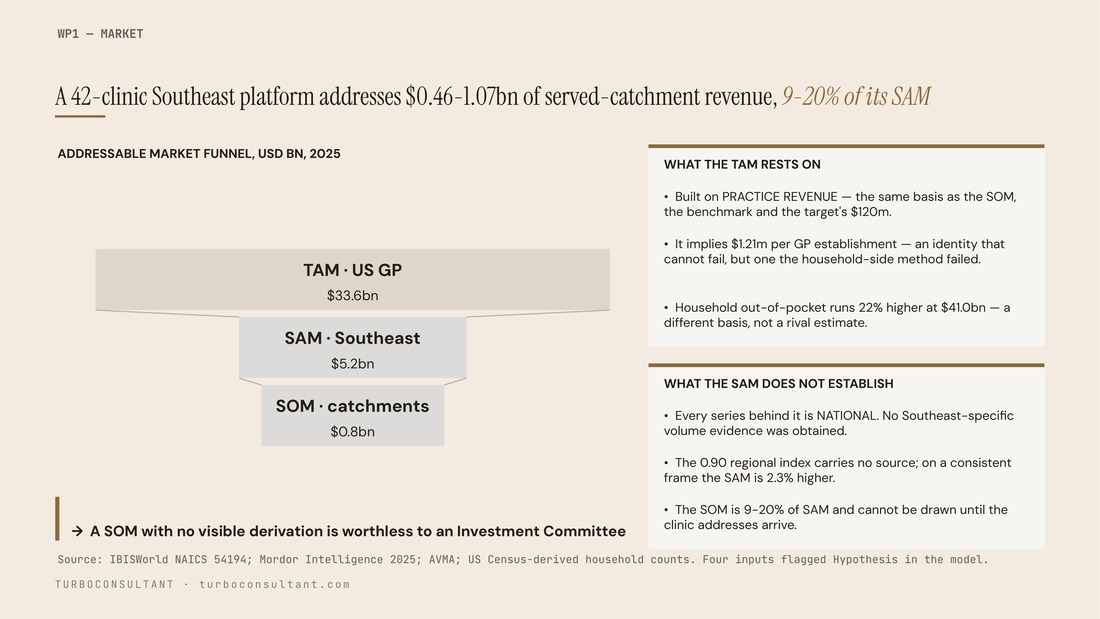
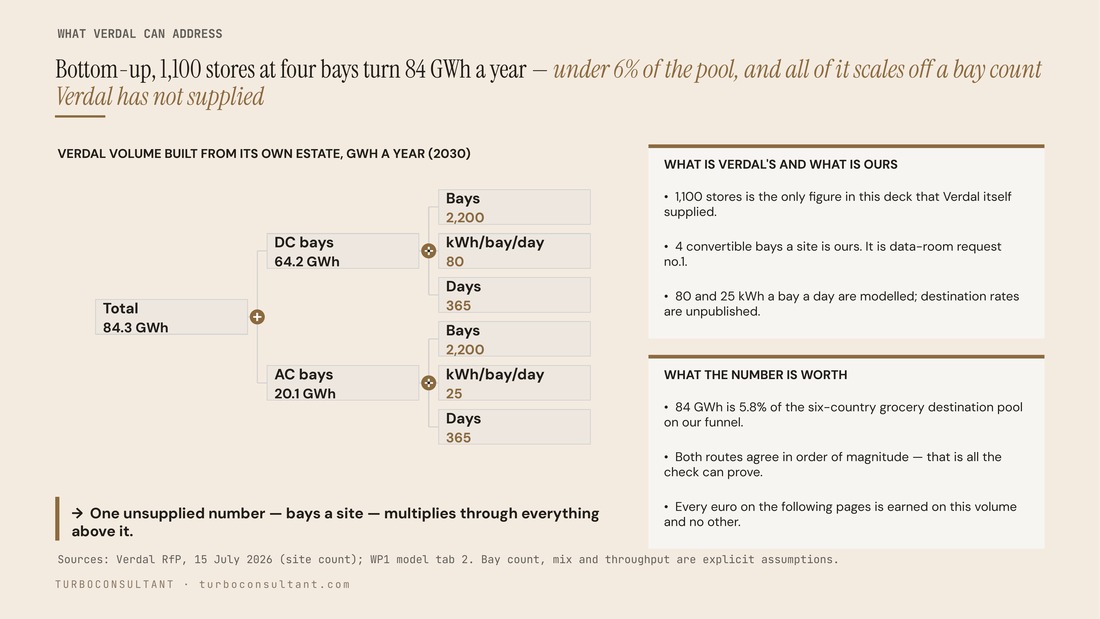
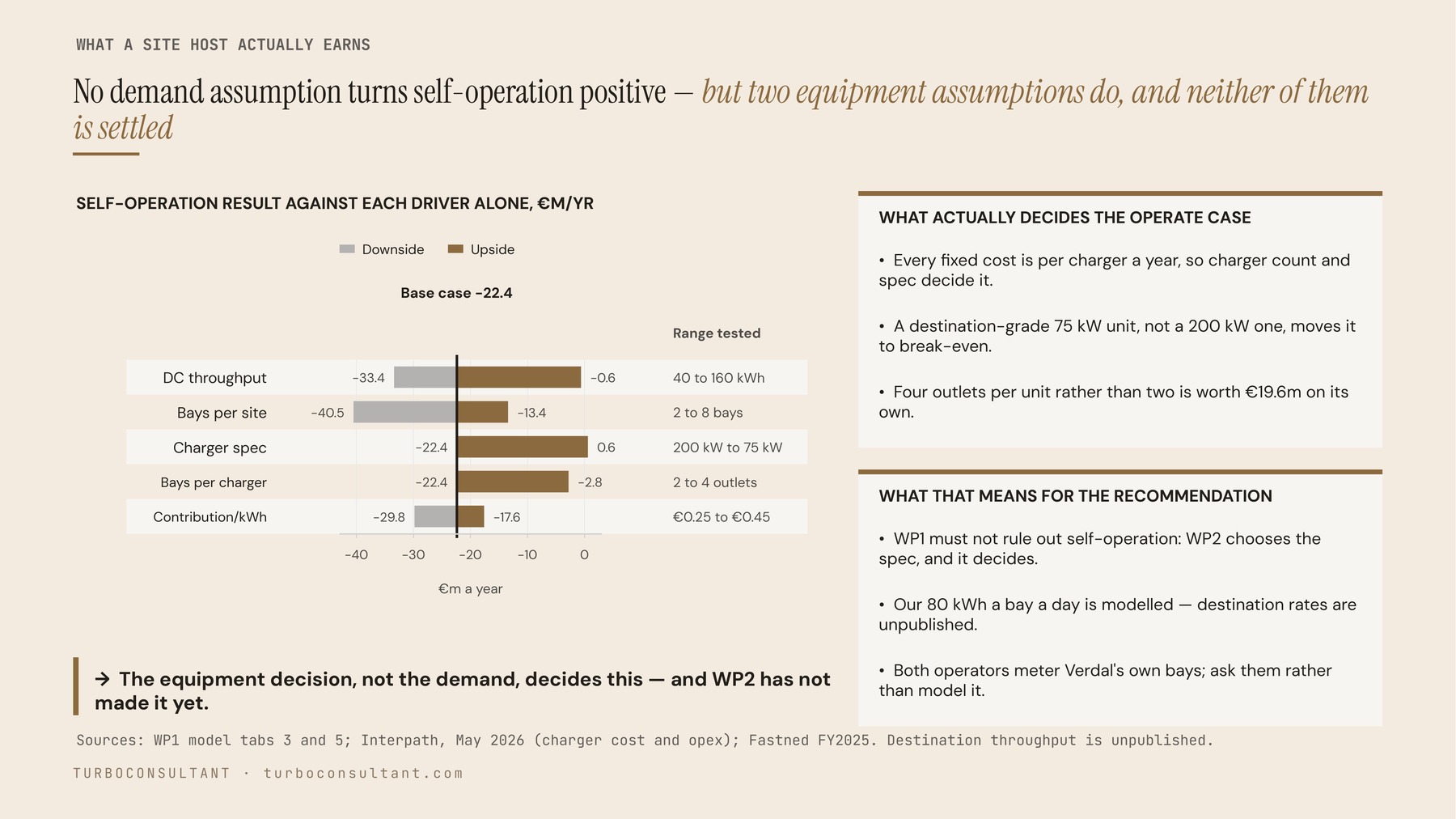
Both engagements are illustrative — constructed companies and briefs, no client data. The profile that produced them is a generic archetype, with no methodologies or past work of mine to calibrate on, which makes this a quality floor rather than a ceiling. More below.
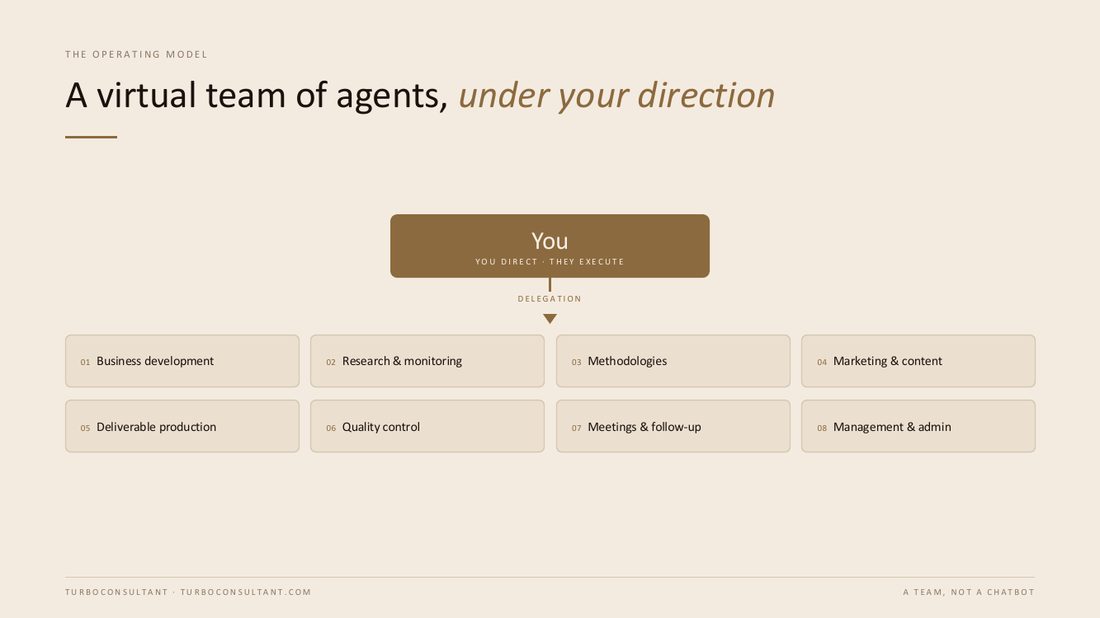
A virtual team of agents, under your direction
Calibrated to your practice during onboarding: your methodologies, your templates, your voice, your standards.
You direct, review and sign. It executes underneath — and your data stays walled off.
Verdal Group — should a grocery chain run EV charging itself?
Eleven hundred supermarkets across six European countries. Large car parks, chargers run by two third parties, almost no return. The board wants the business brought in-house and has a number to justify it.
It starts with what lands in your inbox on a Tuesday morning
A scope, a deadline, a handful of questions. Here: a European grocery chain, 1,100 stores, asking whether it should run the EV charging on its own car parks instead of leasing them out.
Everything below came out of this one document.
Download the request · DOCX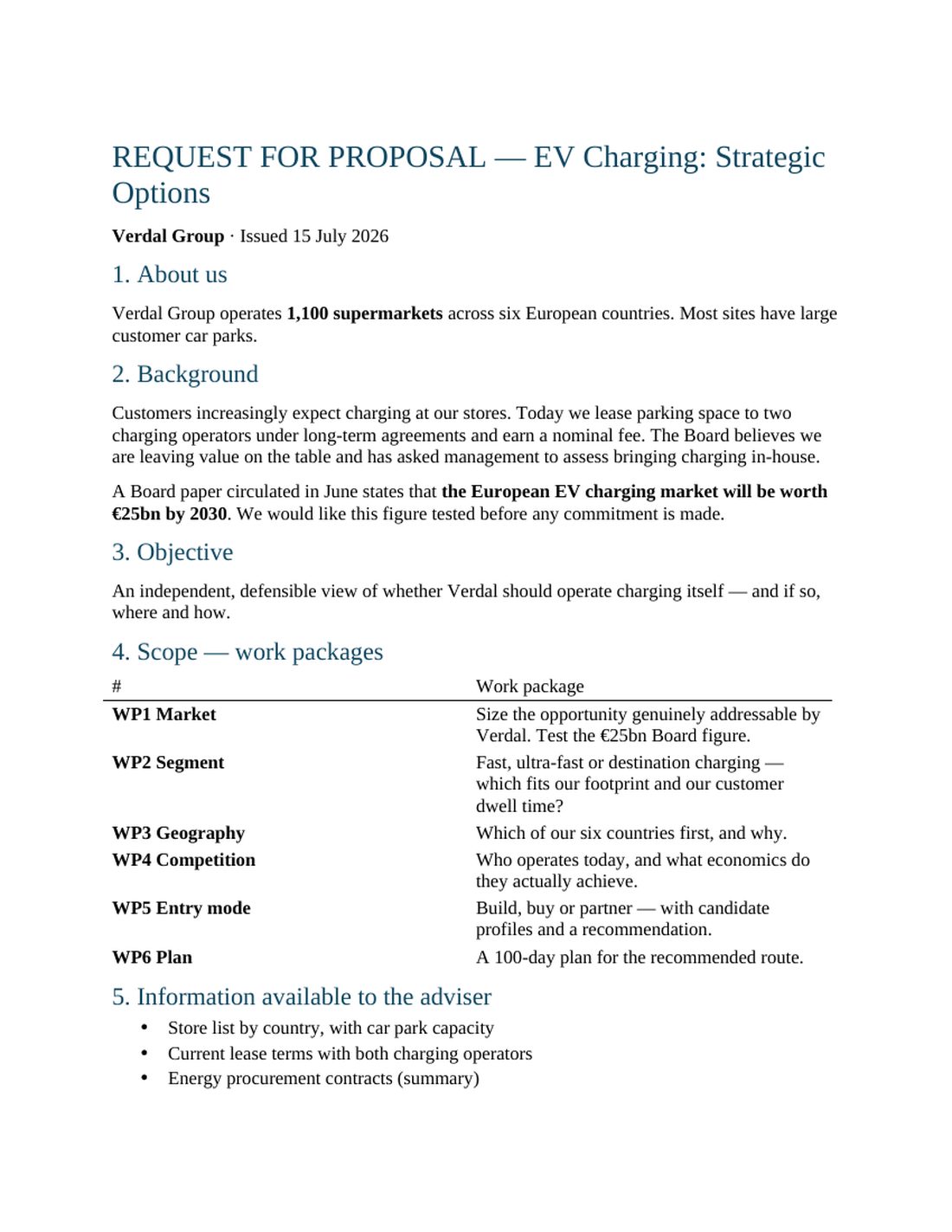
The proposal is drafted in 30 minutes, in your template
It first asks how you want to work:
- Autonomous — it runs on your initial input and hands you the document for review.
- Co-construction — you brainstorm, validate and feed it at every step.
- Intermediate — you validate the big picture, then it delivers.
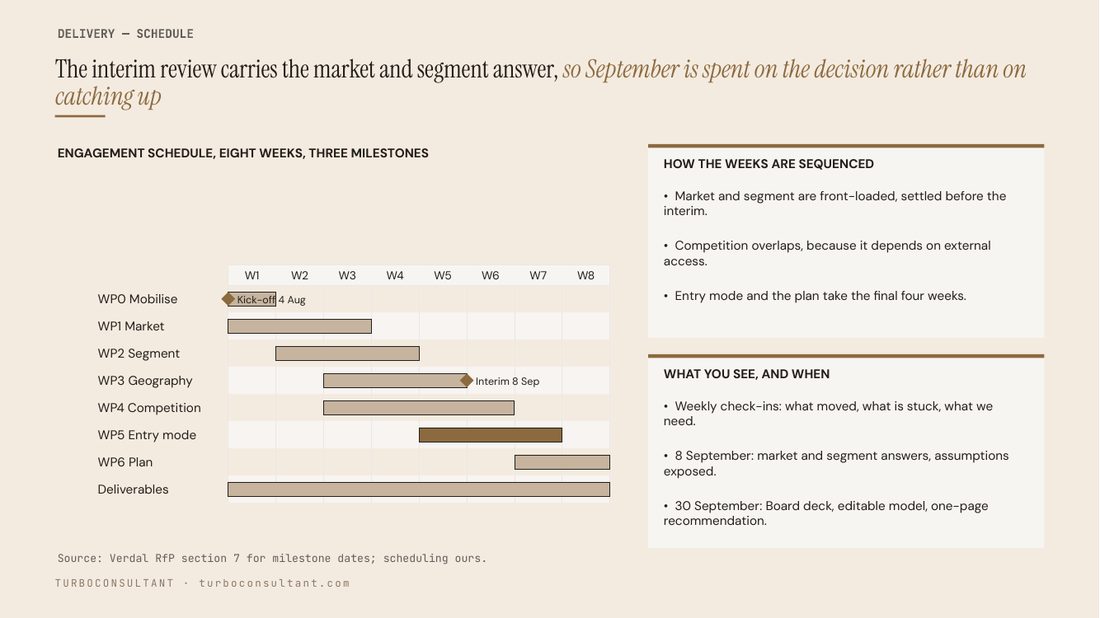
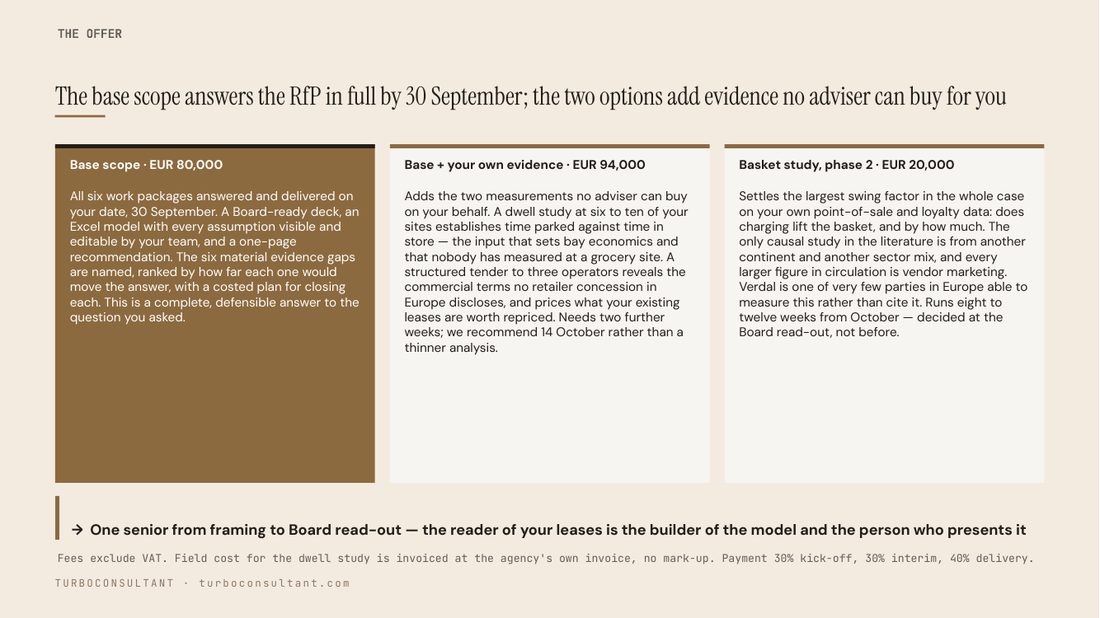
Then the few things it cannot know: whether you already know the client, who delivers, what your day rate is. And it writes — the context, the question behind the question, your approach, what is in and out of scope, the work packages, what you need from the data room, the timeline, the budget options, the next steps.
A proposal of this depth is several man-days for a consultant working without AI.
Download the proposal · PPTX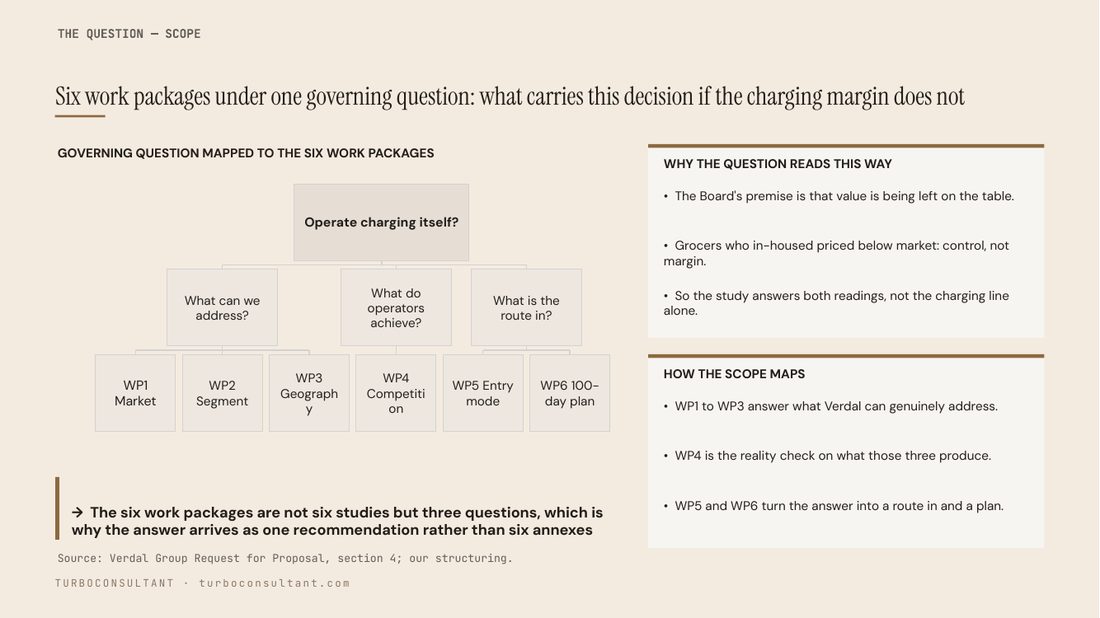
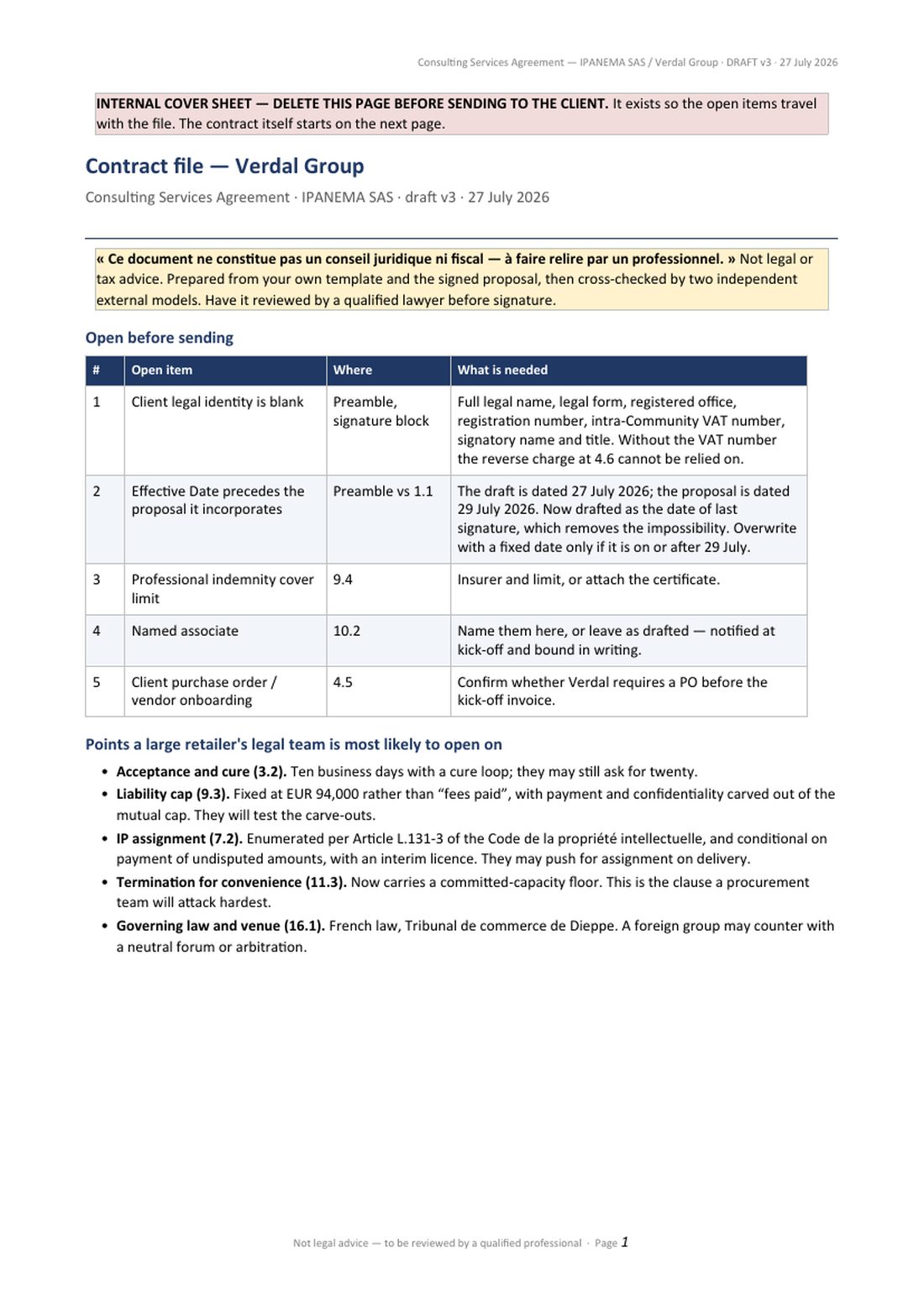
The contract is filled from the proposal you just won
You have a template contract full of placeholders. You have a proposal you just won. Normally you spend two hours moving one into the other.
Here you say you won it, and it asks the few things it cannot know: which option the client retained, which law applies, the effective date, the legal entities. Where the client has to fill something in, it leaves a placeholder rather than inventing it. Two hours saved, every single time.
Then it audits the contract on its own — two outside models read the agreement against the proposal and flag what does not match, what is missing, and what exposes you.
Download the agreement · DOCXRead the contract audit
The whole kick-off pack, prepared in 15 minutes
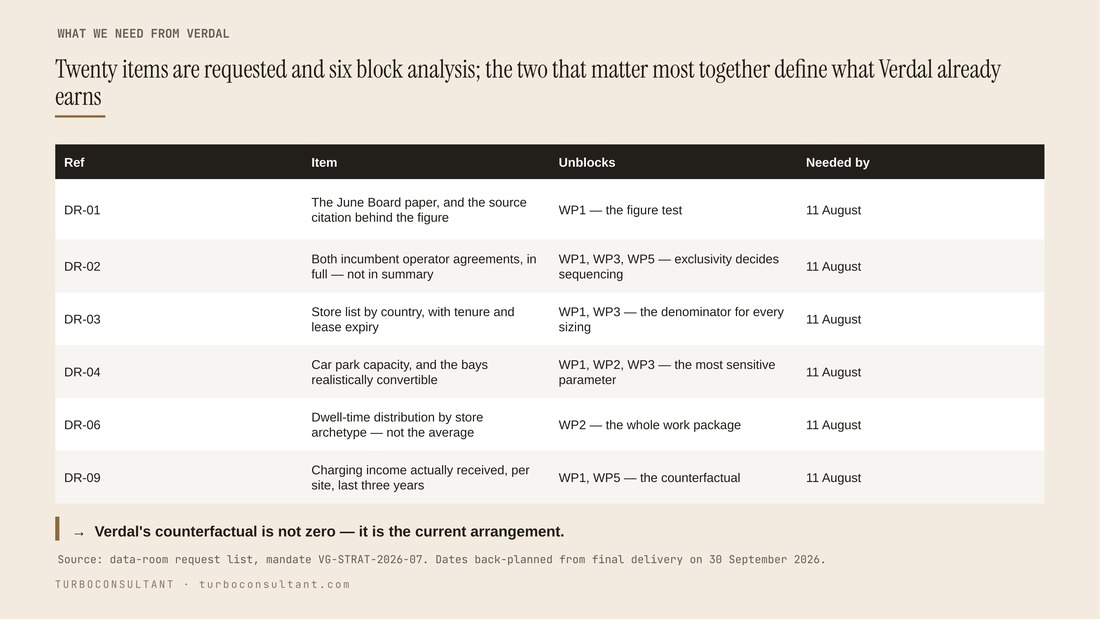
Three documents come out of one instruction: the client kick-off deck, the internal briefing note — assumptions, questions to ask, objections you are likely to get, the landmines and the guardrails — and the data room request list in Excel, item by item, with what each one unblocks and the date it is needed by.
In a firm, this is junior work. On your own, there is no junior: you do it yourself, and it costs you half a day every time. Here it is one instruction, and you go and have a coffee.
Kick-off deck · PPTXInternal briefing note · DOCX
Data room request list · XLSX
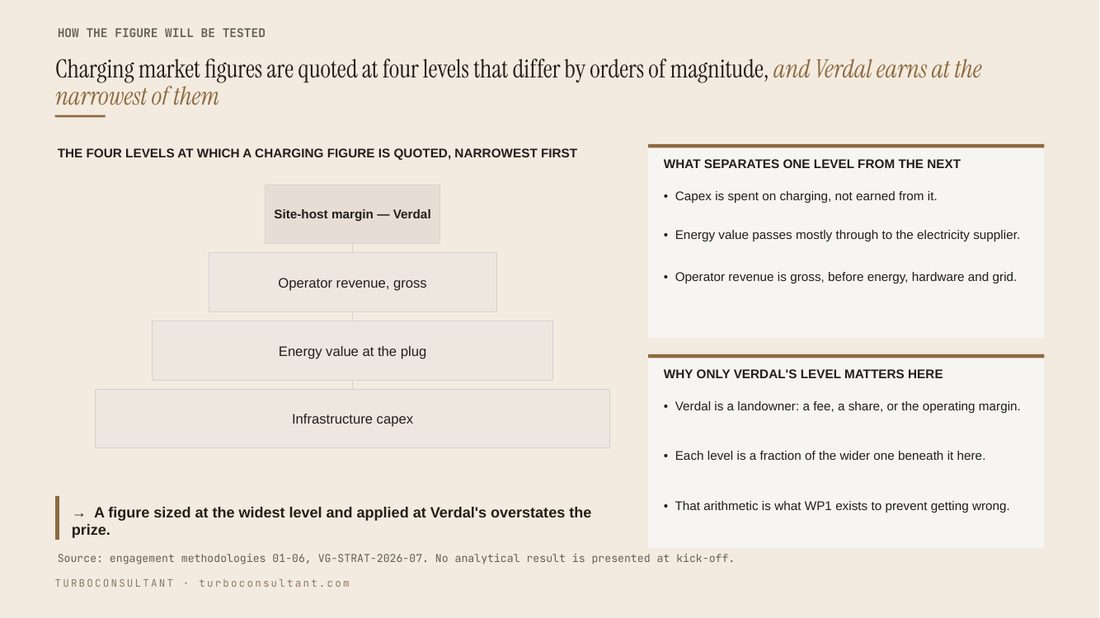
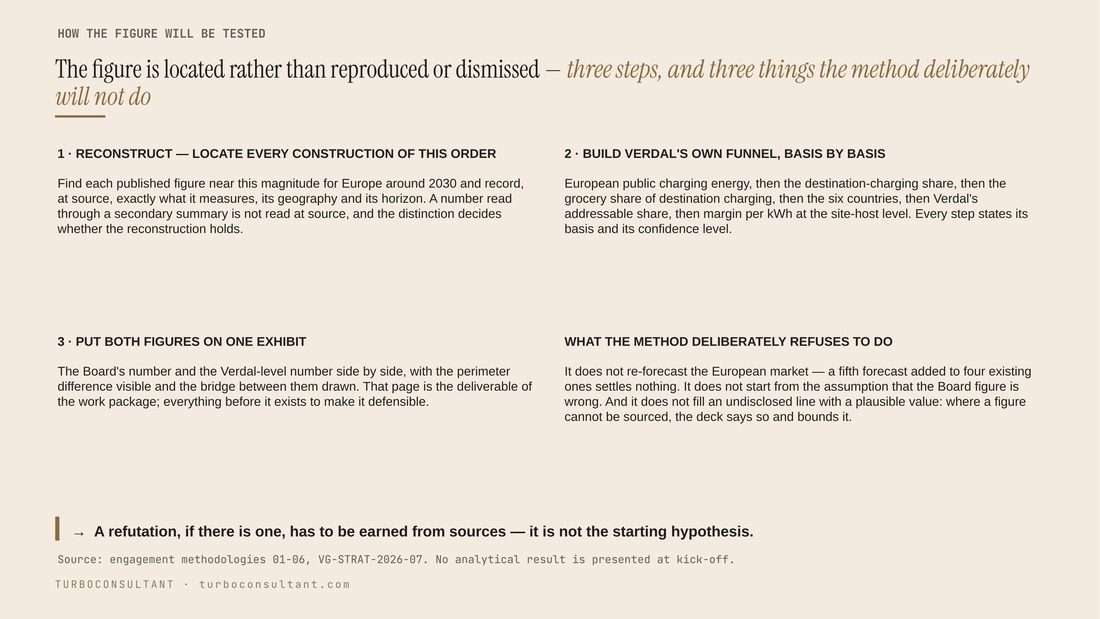
It executes the work package, in your template
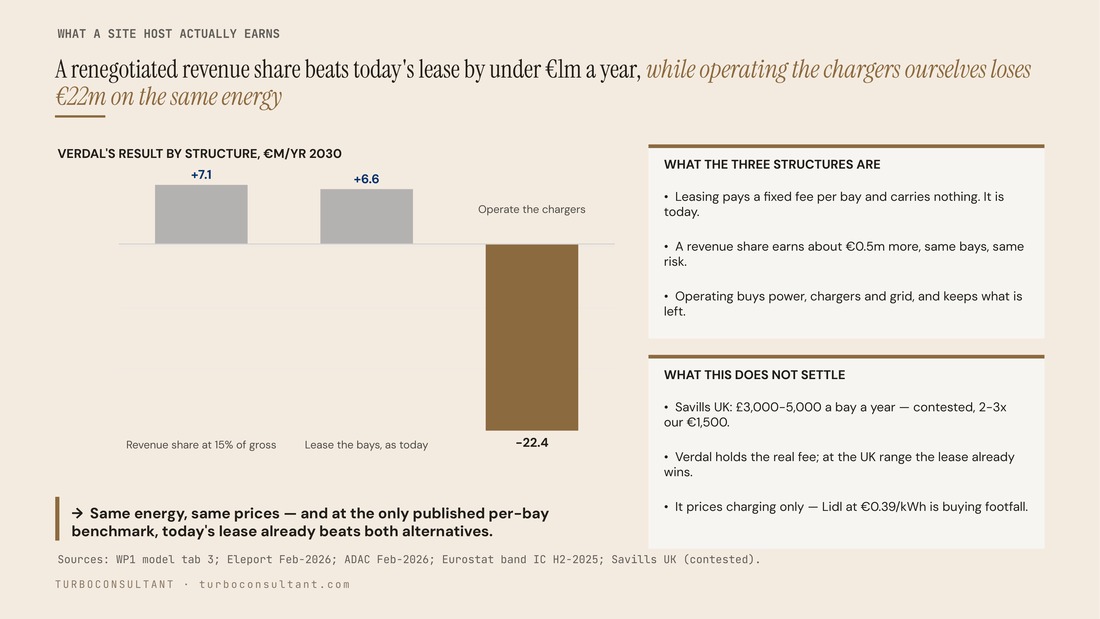
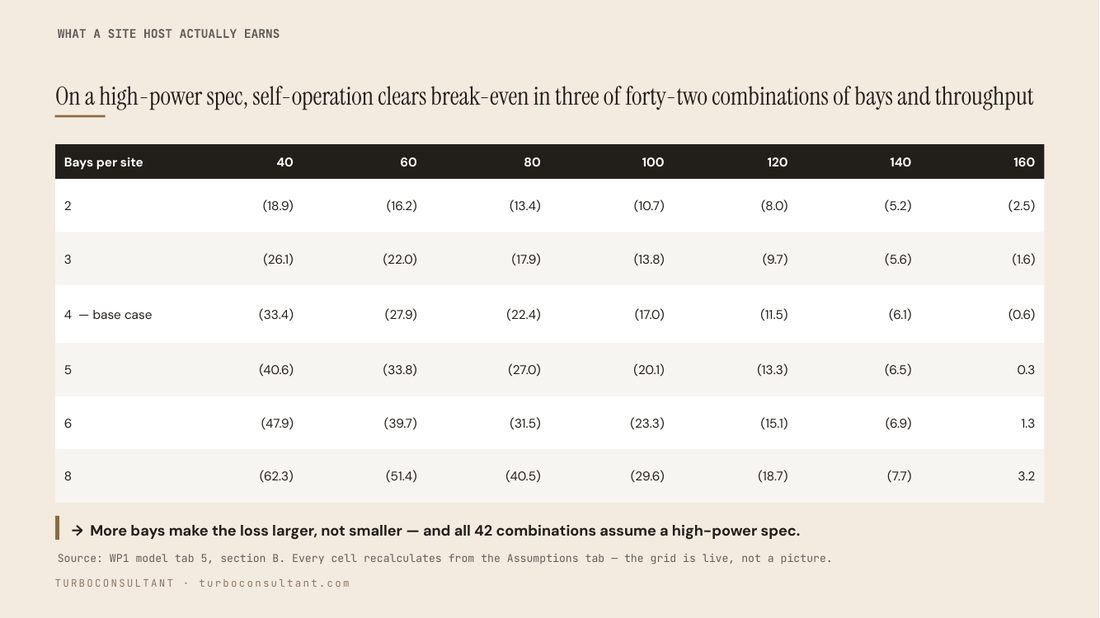
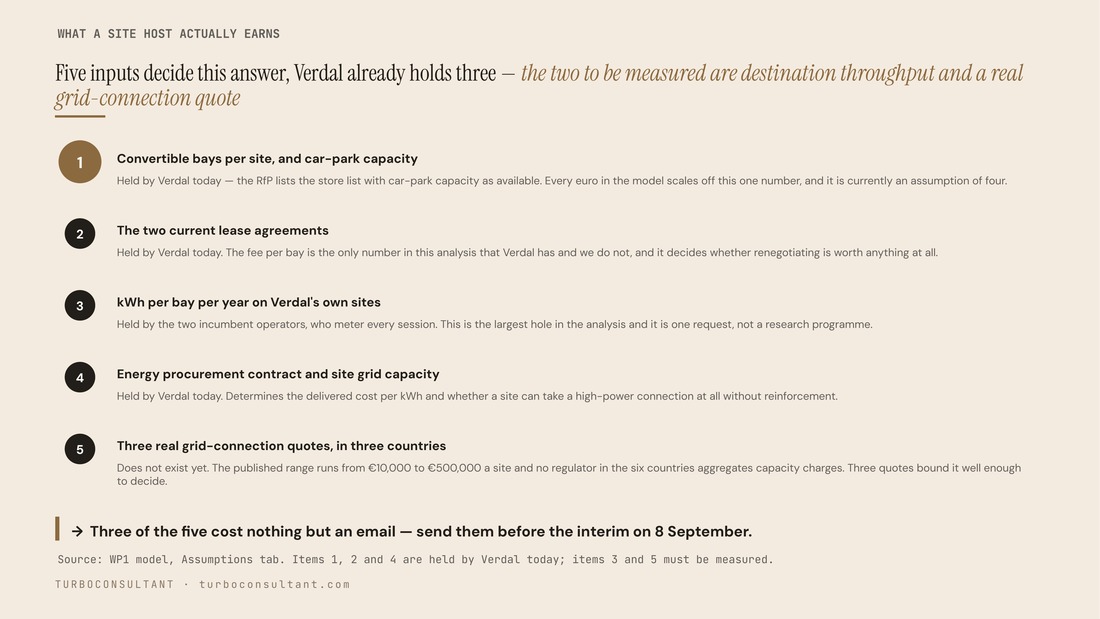
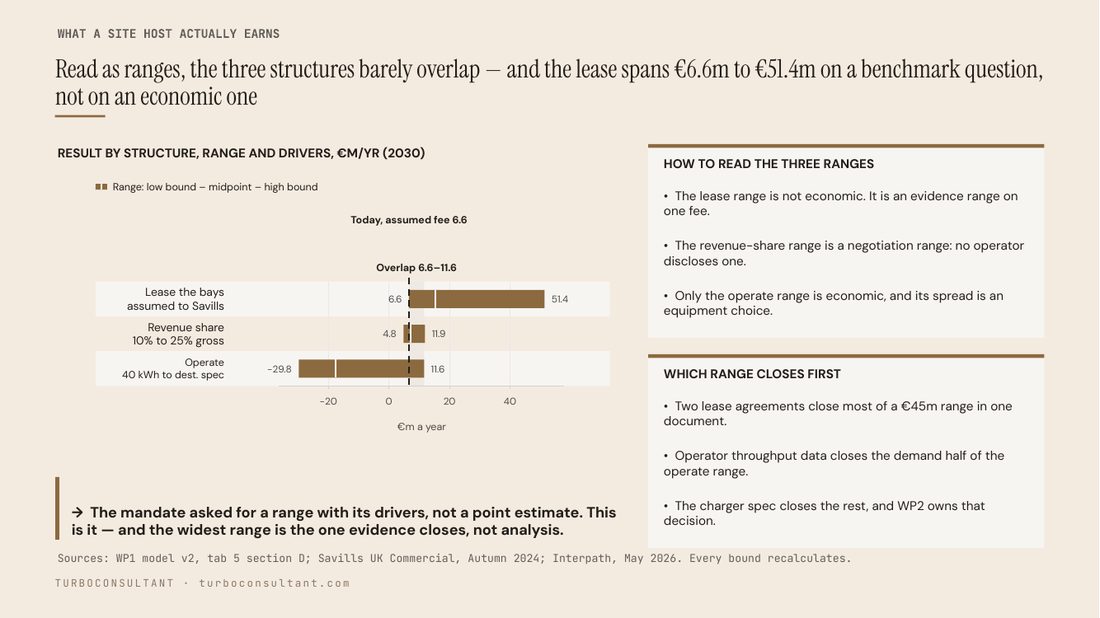
The research, the market sizing, the model behind it, and a deck built in your own consulting-grade template — the one it learned during onboarding. Seventeen pages of exhibits, each carrying an argument, with the sources under every figure.
This is where you sit as a director rather than a producer: you give the instruction, a team executes, and you come back to review what it brings you.
Download the deliverable · PPTX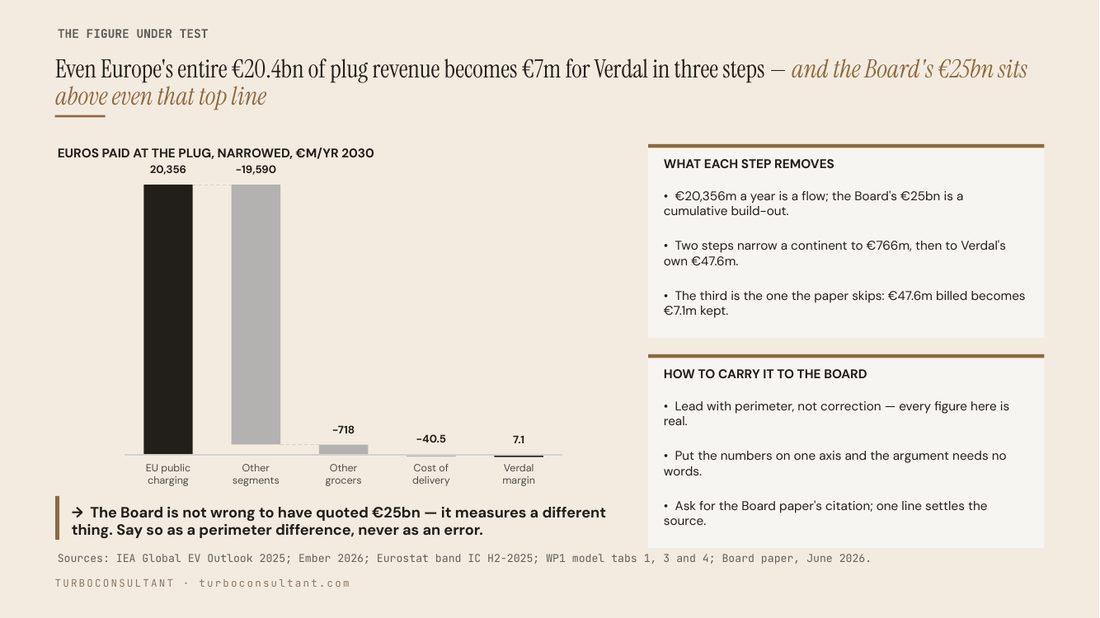
Three layers of quality control, run in 20 minutes
L1 — sources. Every number and every fact traced back to where it comes from, and rated: verified, probable, or not established.
L2 — internal audit. A sub-agent reviews the finished document against a grid built for it. Same model, so it catches the obvious misses — the unsupported claim, the number that contradicts the model, the page that does not carry its title.
L3 — dual external audit. Two models outside the system, independent of each other and of the one that did the work. That is where the real control happens: no shared bias, and two verdicts you can compare. Here they did not agree, and the disagreement is itself informative.
This is also where the system refuses to flatter you. Consumer AI is a yes-man: it agrees, and it takes you faster into the wall. Turboconsultant is built to push back on its own work — and it does.
“The model is the strongest artefact in this engagement, and the deck is currently writing cheques it does not cash.”
You ask it to integrate the findings, then audit again
You don't need to read those reports in full detail. You ask for the audit, then you ask Turboconsultant to integrate the findings and audit again — and you iterate. In half an hour a document moves from roughly 80-85% client-ready to something you only have to put your final review on.
The revised deliverable below is the result of that loop: the corrections applied, the missing sources brought in, and the conclusion adjusted where the evidence moved it.
Download the revised deliverable · PPTX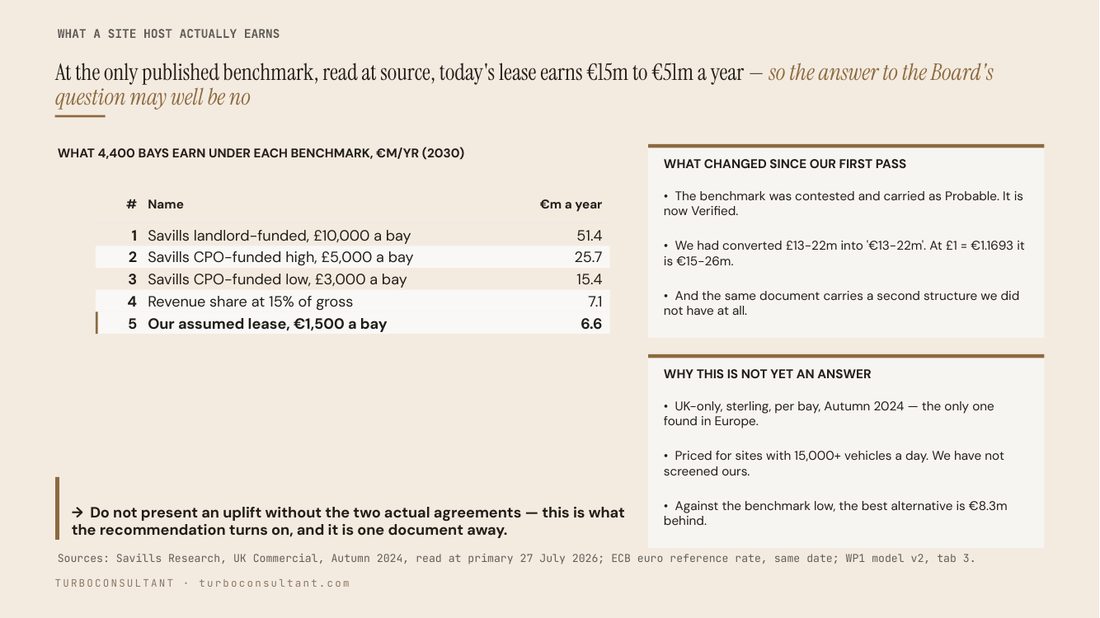
Commercial due diligence on 42 veterinary clinics
Different client, different sector, different question. The steps are the same, and so are the timings. This one was launched live during the recording — the files landed after we stopped, which is why nobody saw them on the day.
The same starting point: one email, a scope, a deadline
A private equity partner, a founder-owned platform of 42 veterinary clinics, $120M of revenue, an investment committee in three weeks. Five questions, and one line that shapes the whole engagement: no client interviews have been done.
Download the email · DOCX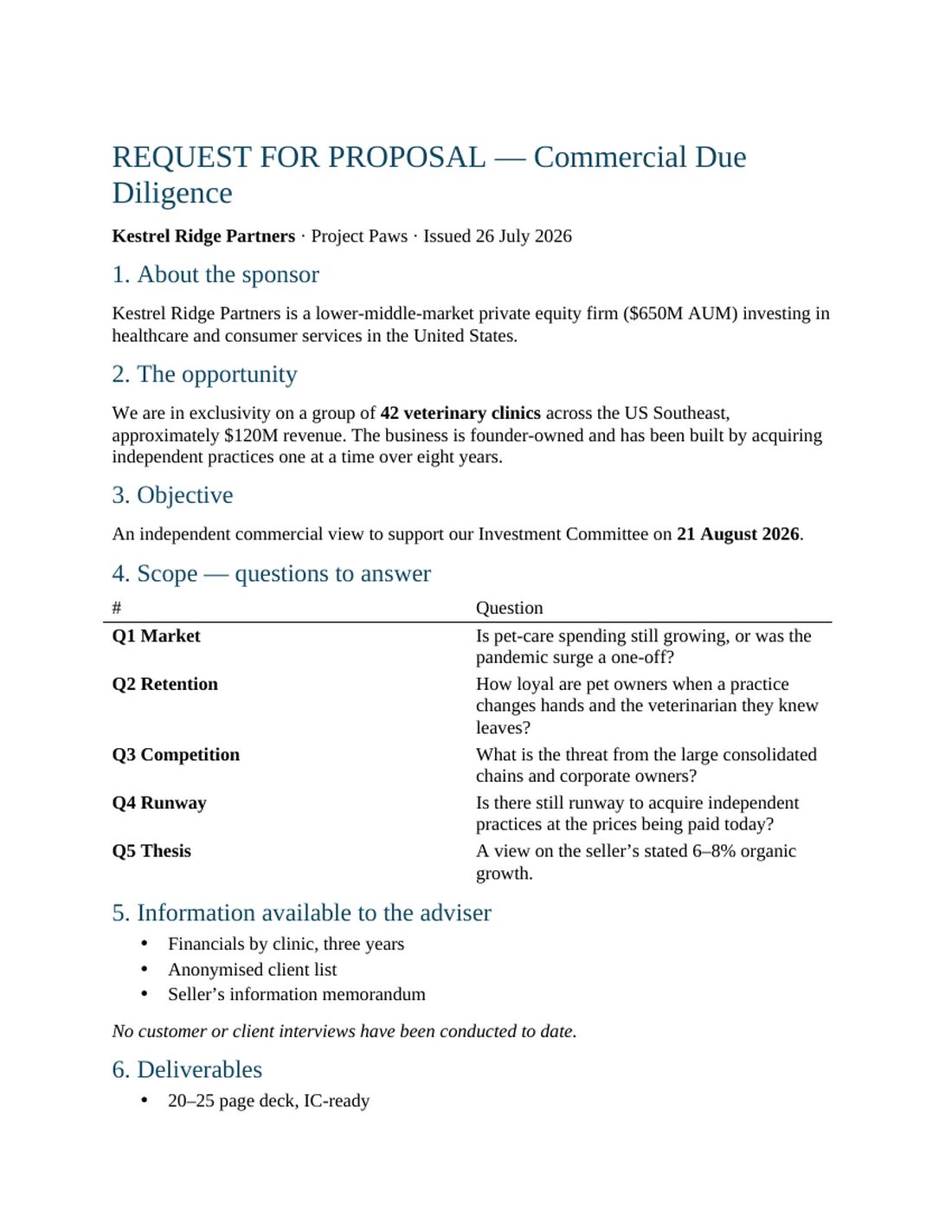
Same 30 minutes, a different sector, the same template
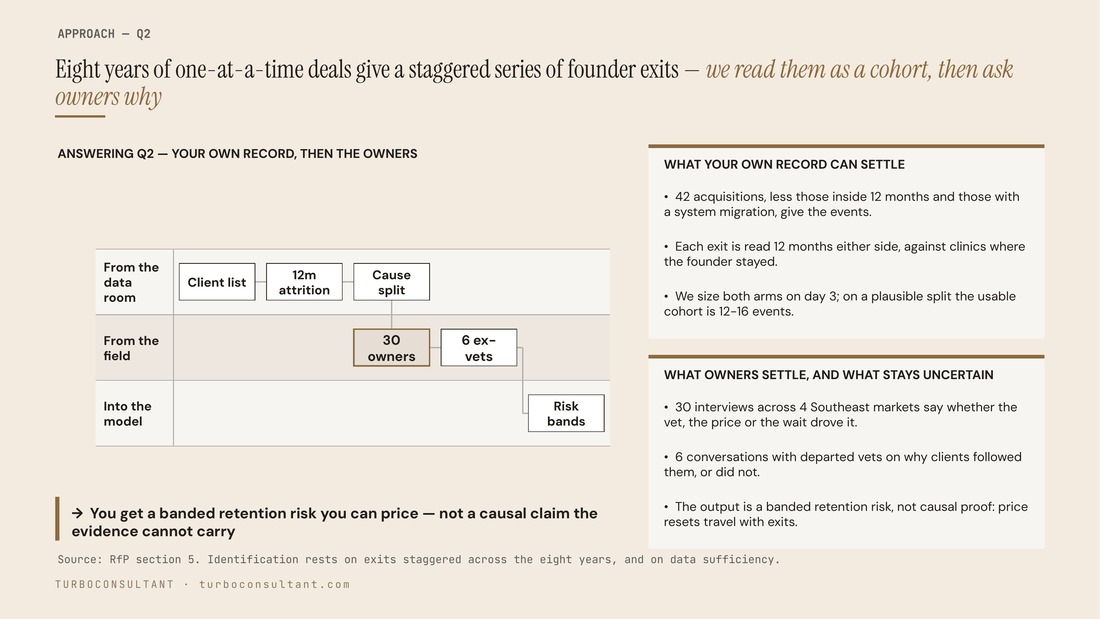
What changes is the thinking, not the format. It tells the client that two of his five questions decide the deal and that neither can be answered from the data room, and that the seller's growth claim cannot be read against a rising market.
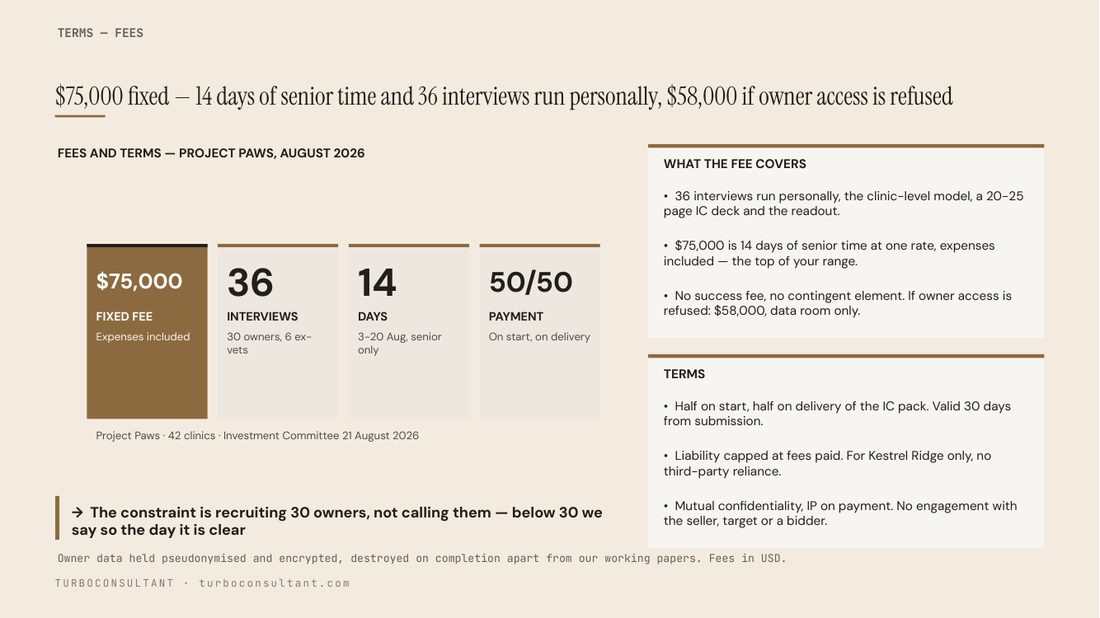
Then the workplan, the assumptions it is carrying, and the fee — $75,000 fixed, 36 interviews, 14 working days, payment split named.
Download the proposal · PPTX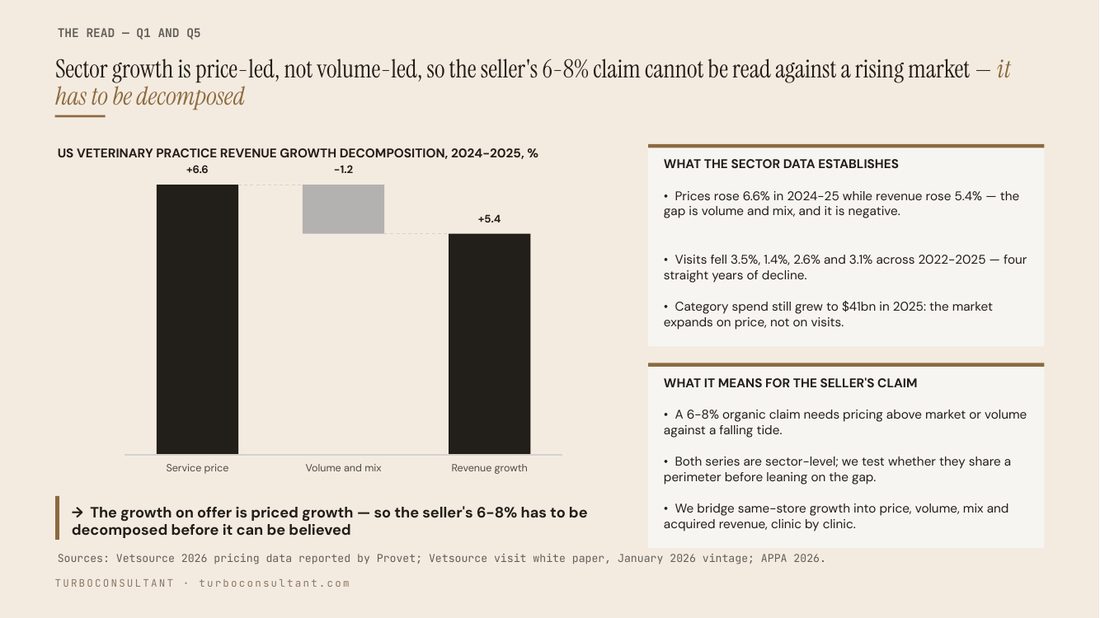
The kick-off pack, again in 15 minutes
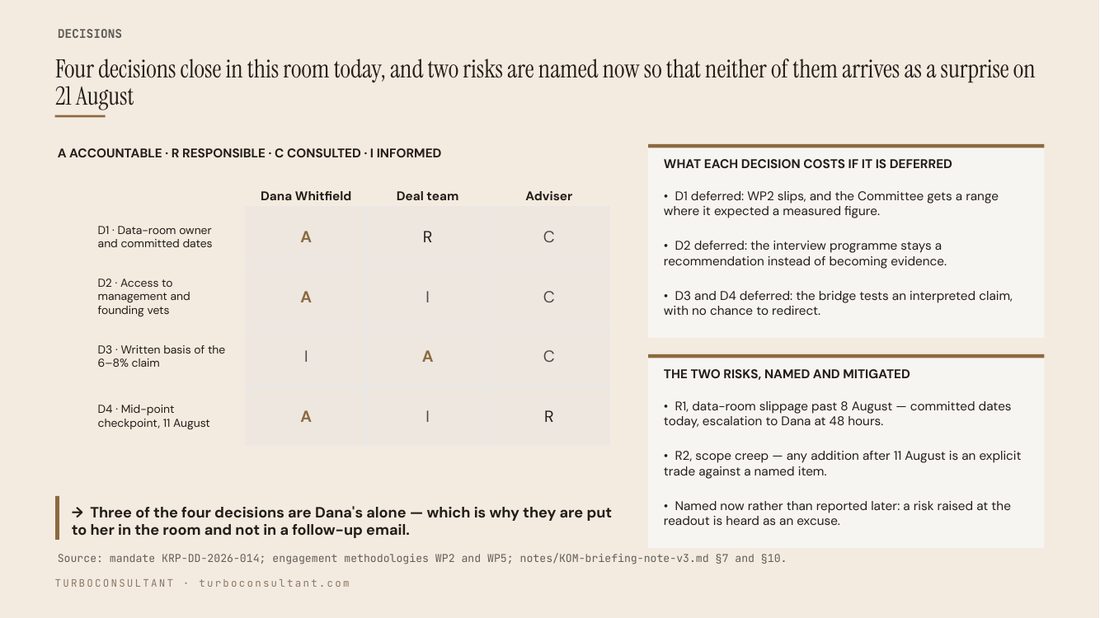
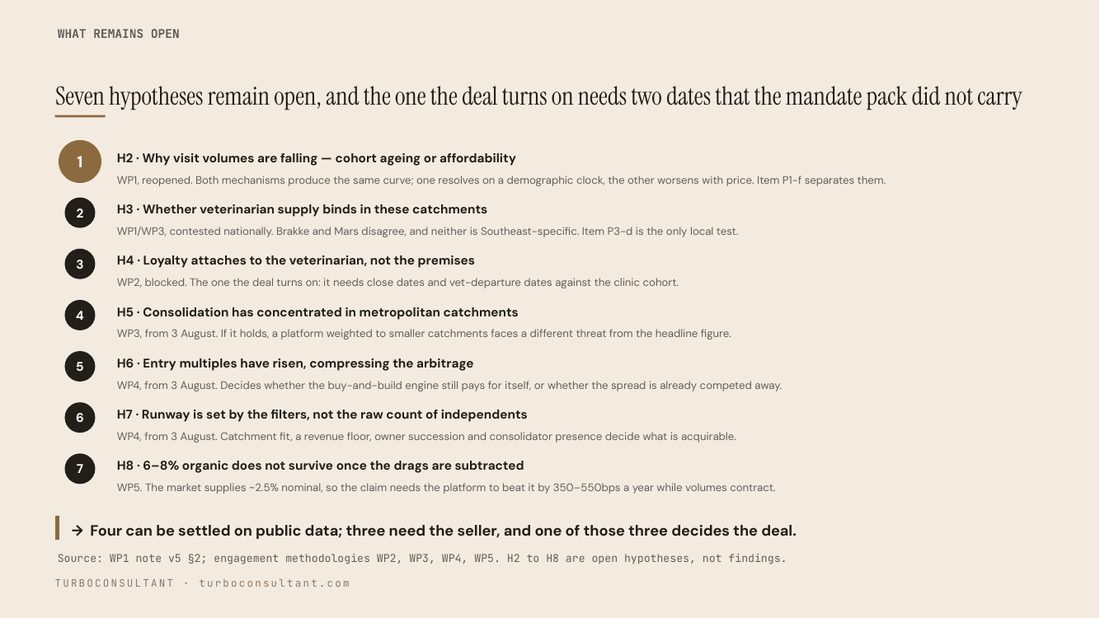
A ninety-minute meeting with one binding outcome: a named owner and a committed date against every data room item. The pack sets the critical path, keeps seven hypotheses explicitly open, and states which two the deal actually turns on.
This is the preparation work that carries no glory and cannot be skipped. You review it instead of producing it.
Download the kick-off deck · PPTX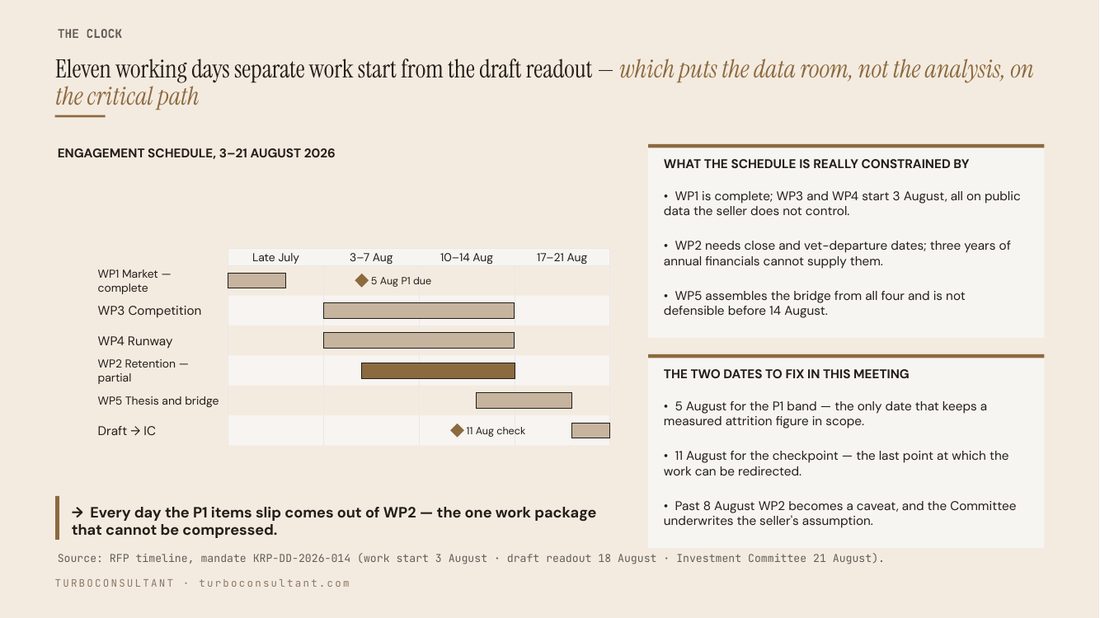
It executes the work package, in the same template
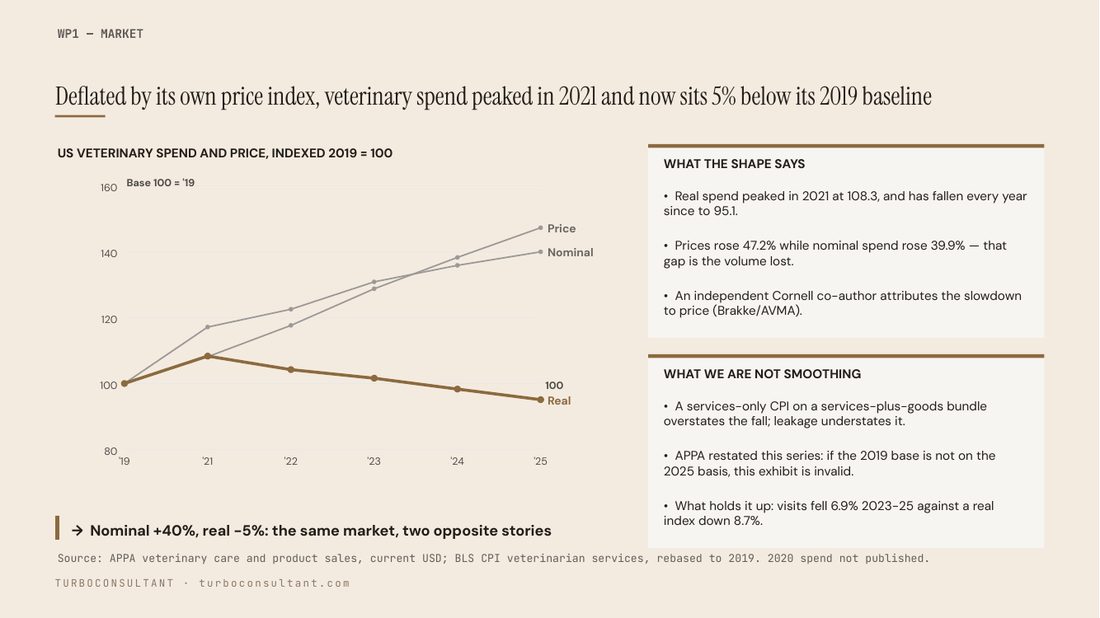
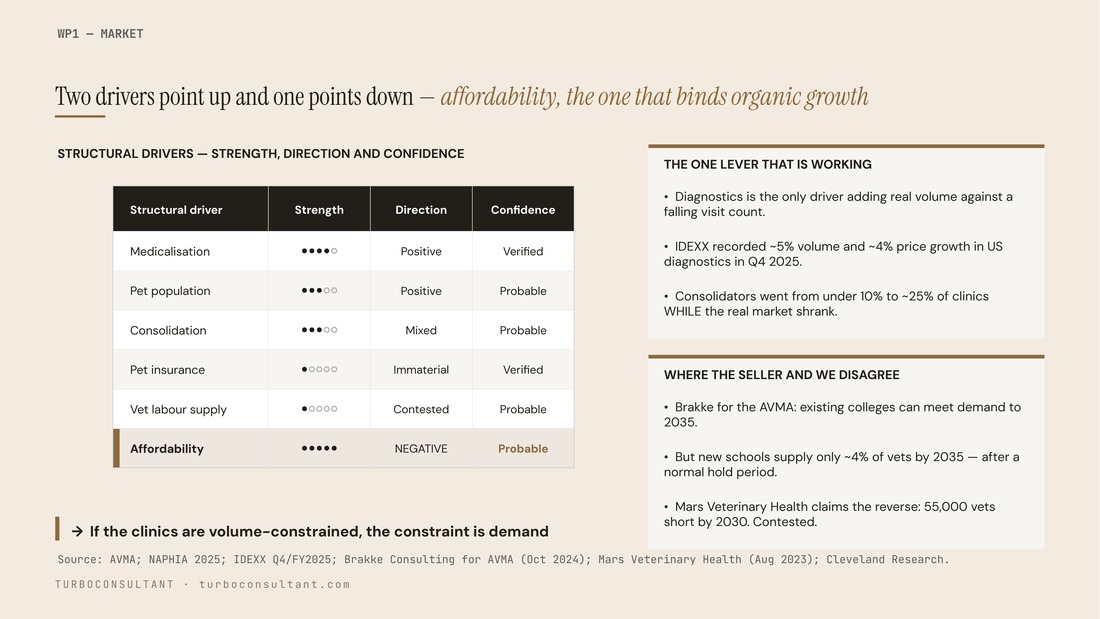
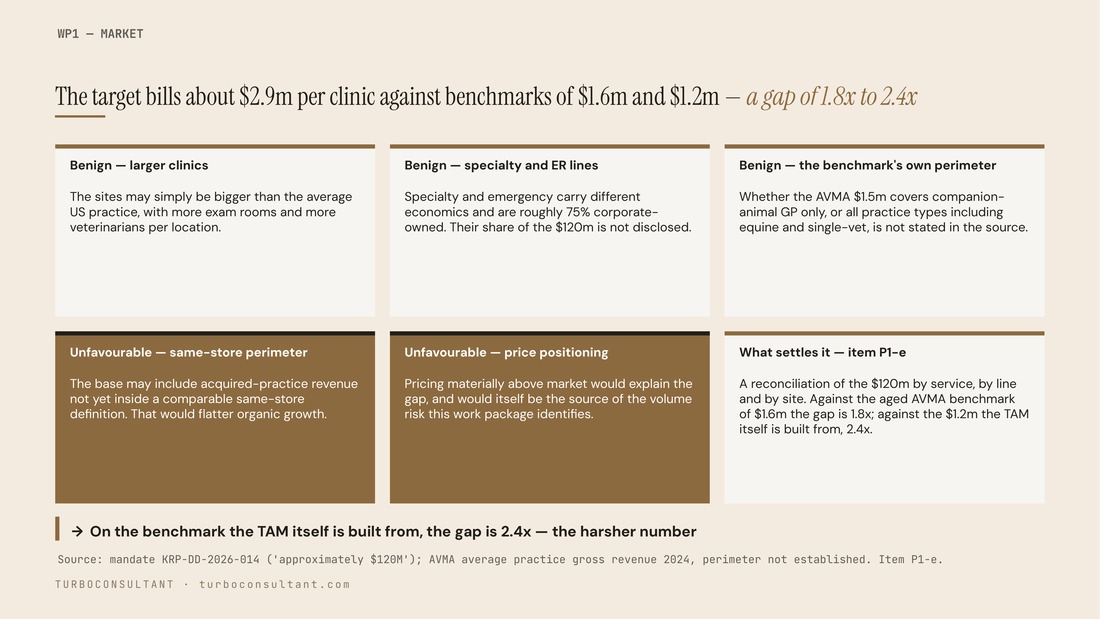
Sixteen pages of exhibits: the market read, the sizing funnel, the structural drivers, and the gaps that still have to close in the data room. Same standard, a different sector.
And the same refusal to please. The seller's story was growth; the data says the growth is price, not volume — spending up 40% in nominal terms since 2019, down 5% in real, visits falling three years running. It settles one of the eight open hypotheses, leaves one open, finds one contested, and says so instead of rounding it into a recommendation.
Download the deliverable · PPTX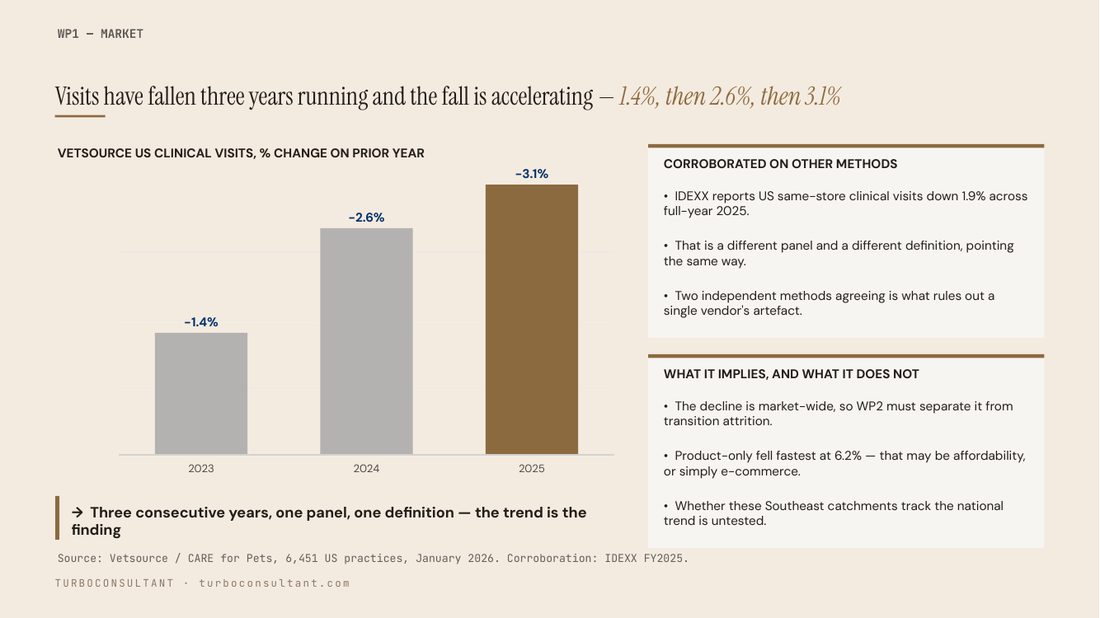
Are you a good fit?
- You consult on your own — strategy or management.
- You want to scale without compromising quality.
- Consumer AI gets you a draft, not a deliverable.
Three yeses? Thirty minutes with me. If it's not a fit, I'll tell you.
Book 30 minutes · freeWhere does your practice actually stand on AI?
Nine questions, three minutes, scored against current practice in consulting. Your score appears immediately; the full report lands in your inbox.
Turboconsultant
Your agents, built for your practice. One-click install, personalised onboarding guided over a video call — your methodologies, your templates, your voice, your data walled off.
- Founding price, for life
- No setup fee
- No commitment — cancel anytime
AI-First Audit
Already running on AI? Thirty minutes on your current stack, then a written report: your quick wins and the action plan to close the gap with the best AI practices in consulting.
- Personalised report delivered after the session
How to read the quality you have just seen
It is a floor, not a ceiling.
Both engagements are illustrative: the companies, the briefs and the figures attributed to them were constructed for the demonstration, and no client data was used. The profile that produced them is a generic archetype — no proprietary methodologies, no past deliverables, no writing samples to calibrate on, no connected systems. The only inputs were one request by email and publicly available sources.
A real onboarding changes that. Your own methodologies, your templates and your past engagements go in first, and the same process starts from a materially higher standard than the one on this page.
Timings are the elapsed time of each task on this run. Everything above is downloadable — all the files from both engagements, plus the overview deck from the episode.